


Inviting Nicole Lapin, founder of Money News Network, to be a part of our community of founders and share her entrepreneurial wisdom and personal style secrets felt so right. Below, Nicole talks financial literacy, how fashion communicates confidence, and ambition without apology.
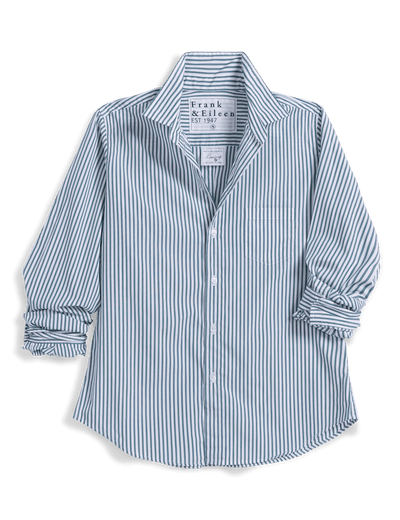
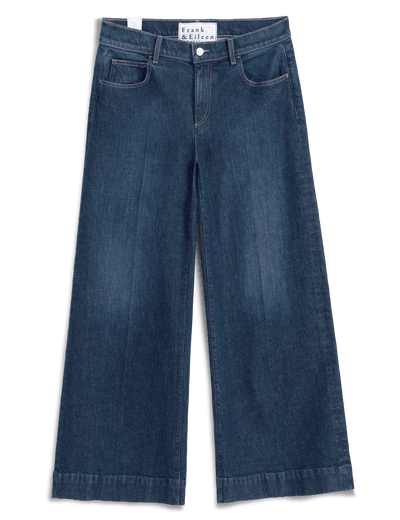
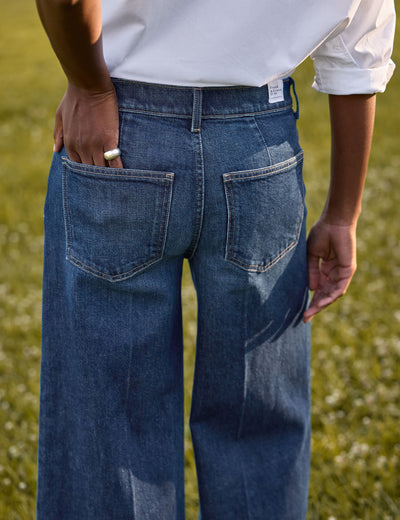
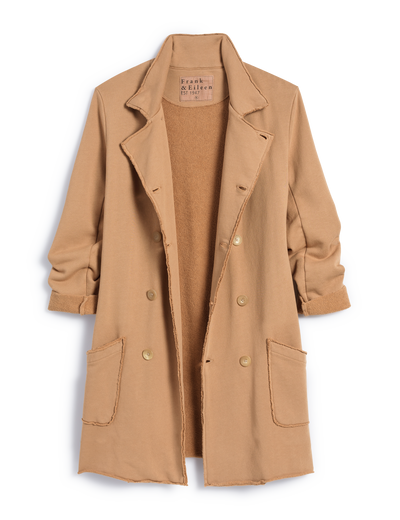
SHOP NICOLE's PICKS





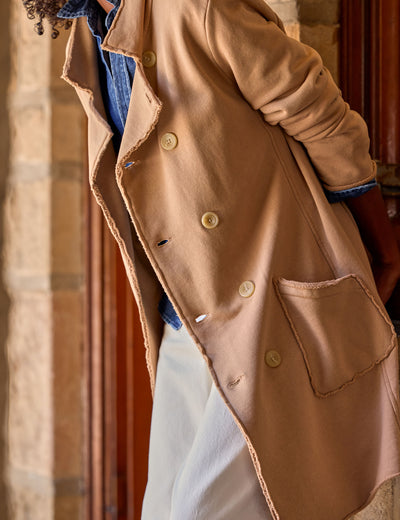

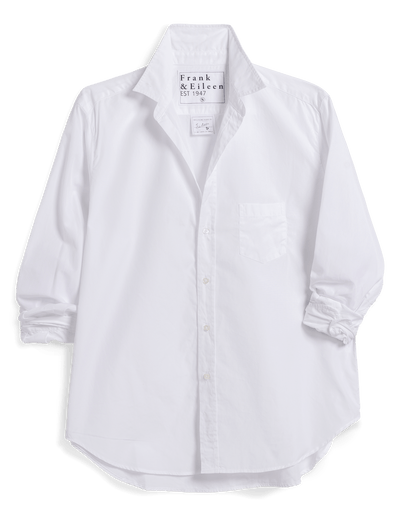
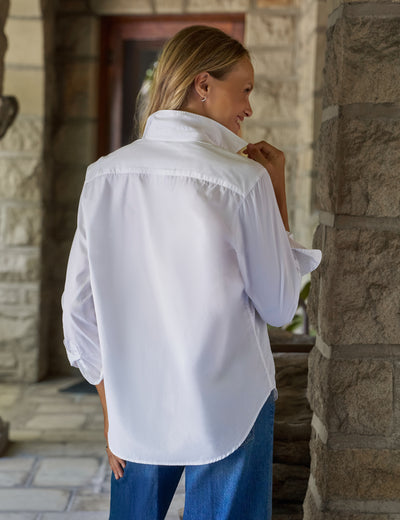

OUR CHAT WITH NICOLE
Nicole Lapin is the founder of Money News Network, built to make financial literacy feel approachable rather than intimidating. A financial journalist turned entrepreneur, she is candid about the seasons, setbacks, and hard things that shaped her path. We sat down for a cuppa with Nicole to chat all things calendar blocking, monochromatic dressing, and why women’s ambition shouldn’t need an apology.


NICOLE: I’m actually much less type-A than people expect. My system is less about perfection and more about reducing friction. I try to remove as many unnecessary decisions from my day as possible so I can preserve energy for the things that actually require creativity or judgment.
I’m obsessive about calendar blocking. If it’s not on the calendar, it usually doesn’t exist. I also think founders romanticize chaos too much. Being overwhelmed is not a personality trait. I’ve learned that operational clarity is a form of self-care.
That said, my life is not color-coded serenity. I run a media company, host podcasts, build businesses, and have a young daughter. Some days are incredibly glamorous and some days I’m recording interviews while reheating coffee for the fourth time. I think women especially feel pressure to make productivity look effortless. Mine definitely is not.
JESSICA: Comfort definitely comes first when traveling, but I do also like to feel put together because a lot of the time I'm going somewhere directly after landing. My go-to is a loose-fitted pair of jeans with an easy-to-slip-on-and-off shoe, a relaxed top, and an oversized, cozy sweater or cardigan.
F&E: We intentionally design pieces that are perfectly imperfect and made to live in. What are your favorite or most-worn Frank & Eileen silhouettes and why?
JESSICA: A white button-up was the first Frank & Eileen piece that I owned and it’s still one of my favorites. Now I have it in a few colors and love the new plaid! It's the best piece to pack with me wherever I'm going because it's so versatile. I'll wear it as an everyday piece, dressed up for dinner tied over a skirt or nice pant, or over a bathing suit to the beach. It's also my favorite button-up to ride in because the fit is relaxed enough that you can move easily and comfortably. I can't say enough good things about it!
F&E: As a champion of female financial literacy, what’s the one piece of financial advice you wish every woman knew?
NICOLE: That money is not just about money.
Money affects who you depend on, where you live, whether you can leave a bad relationship, whether you can rest, whether you can take risks, whether you can say no. Financial independence changes the emotional architecture of your entire life.
For years women were taught to approach money morally instead of strategically. Wanting wealth was treated as shallow or unfeminine. Meanwhile, entire industries were built around men openly pursuing ownership, leverage, and power without apology.
I wish more women understood that building wealth is not greed. It’s optionality.
F&E: What does your workspace actually look like right now?
NICOLE: A little bit newsroom, a little bit fashion closet, a little bit startup war room.
There are usually podcast microphones next to stacks of books, production notes mixed with beauty products, and at least one neon sign somewhere in the background. I’ve always wanted Money News Network to feel visually different from traditional financial media. Finance historically looked so cold and intimidating to me. I wanted the environment to feel more culturally fluent and emotionally inviting.
There’s also usually a child-related object somewhere nearby now. A stuffed animal has absolutely made it into business meetings.
F&E: What’s your opinion on female founders retaining 100% ownership of their businesses (as Audrey has) versus taking on investors or pursuing venture capital?
NICOLE: I think women are often pushed toward venture capital before they fully understand the trade-offs. Venture money can be incredibly powerful in the right circumstances, but it’s not free money. You’re exchanging ownership, control, and often pace of life.
There’s almost social pressure in startup culture to raise money because it signals legitimacy. But profitability is legitimacy too. Ownership is legitimacy too.
Money News Network was built without outside funding, and I’m very grateful for that now because it allowed us to build intentionally instead of optimizing for someone else’s timeline.
I think more women are starting to ask a smarter question: “What kind of company do I actually want to build?” not just “How fast can I scale it?”
F&E: We’re all pursuing that elusive perfect balance of feeling happy now but also planning for our future happiness and security later on in life. As someone who built her business and finances from the ground up, how do you go about finding this balance?
NICOLE: I honestly don’t believe balance exists in the way we’ve been sold it. I think life moves in seasons.
There are seasons where work takes more from you. Seasons where family does. Seasons where survival itself takes priority. I spent a lot of my twenties chasing achievement because I thought success would eventually create emotional safety. Then life humbles you enough to realize safety is more internal than external.
Financial planning helped me enormously because it reduced ambient anxiety. Knowing I have systems, reserves, and plans allows me to actually enjoy my life more in the present. People think planning for the future steals joy from today, but I’ve found the opposite.


NICOLE: Walking. I underestimate how much I need movement until I don’t have it. I also protect my mornings much more now. For years I woke up directly into information consumption—emails, markets, texts, headlines. It trains your nervous system to exist in reaction mode.
Now I try to create at least a small buffer before the world gets access to me. And honestly, becoming a mother changed my relationship to ambition in a way I didn’t expect. It made me more focused, not less.
F&E: What would the future look like if we had exponentially more women entrepreneurs? If 50% of the companies were run by women, how would our world be different?
NICOLE: I think we would redefine what success looks like. Women tend to build businesses with a different relationship to community, longevity, emotional intelligence, and consumer behavior because we experience the economy differently. We think about caregiving, flexibility, burnout, healthcare, relationships, safety, fertility, and aging parents, often simultaneously. I also think entire categories would evolve faster. Women drive so much consumer spending already, yet capital allocation still heavily skews male. There’s an enormous disconnect there. And frankly, I think we’d probably build fewer products designed to optimize dopamine addiction and more products designed to improve actual quality of life.
NICOLE: Walking. I underestimate how much I need movement until I don’t have it. I also protect my mornings much more now. For years I woke up directly into information consumption—emails, markets, texts, headlines. It trains your nervous system to exist in reaction mode.
Now I try to create at least a small buffer before the world gets access to me. And honestly, becoming a mother changed my relationship to ambition in a way I didn’t expect. It made me more focused, not less.
F&E: What would the future look like if we had exponentially more women entrepreneurs? If 50% of the companies were run by women, how would our world be different?
NICOLE: I think we would redefine what success looks like. Women tend to build businesses with a different relationship to community, longevity, emotional intelligence, and consumer behavior because we experience the economy differently. We think about caregiving, flexibility, burnout, healthcare, relationships, safety, fertility, and aging parents, often simultaneously. I also think entire categories would evolve faster. Women drive so much consumer spending already, yet capital allocation still heavily skews male. There’s an enormous disconnect there. And frankly, I think we’d probably build fewer products designed to optimize dopamine addiction and more products designed to improve actual quality of life.


F&E: Looking back, if you could give your younger self one piece of advice, what would it be? Then, what piece of advice would you give someone starting their entrepreneurial journey now?
NICOLE:To my younger self: stop confusing other people’s approval with safety.
So many young women are rewarded for being agreeable before they’re rewarded for being powerful. You spend years trying to become impossible to criticize instead of impossible to ignore.
To someone starting now: build something real before you build something impressive looking. We live in an era where branding can create the illusion of success very quickly. But eventually the fundamentals always matter.


F&E: Do you have an everyday uniform that limits your decision fatigue, or what’s your approach to getting dressed?
NICOLE: I definitely have formulas.
I love monochromatic looks because they make you appear polished even when you’re moving quickly. Structured blazers, tailoring, saturated colors—a lot of green, obviously.
Fashion has always been part of how I communicate confidence. Not in a frivolous way; in a psychological way. Clothing changes how you enter a room.
I also intentionally used fashion and visual branding to make money feel less intimidating. Traditional financial media always looked so sterile and exclusionary to me—gray suits, red tickers, men yelling about the market. I wanted Money News Network to feel emotionally different. That’s why the brand language includes saturated greens, glossy editorial styling, gold bars, raining money, cash in smoothie cups, bold monochromatic looks. I leaned into overt money imagery at a moment when culture was obsessed with stealth wealth, because I wanted finance to feel approachable, recognizable, even a little playful. Women were never intimidated by sophistication; they were intimidated by feeling unwelcome, like the experts in the space weren’t their people.
F&E: What’s your “stone in the hand?” In other words, what keeps you grounded and helps you never give up? Is it an object, a memory, a person, a word of advice?
NICOLE: Honestly, surviving hard things.
I lost my home in the fires shortly after becoming a mother. There’s something clarifying about realizing how quickly life can rearrange itself. It strips away a lot of illusion about control and perfection.
It also made me much less afraid professionally. Once you survive real loss, you stop treating every business risk like an existential threat.
And my daughter changed my relationship to fear completely. She made me think much longer-term about legacy, stability, and what kind of example I want to set.
F&E: What does it mean to you to be part of this community of founders in this September Issue, committed to using your experience to pay it forward to the next generation of women entrepreneurs?
NICOLE: I think women are finally becoming more honest with each other about what building something actually looks like.
Not just the aesthetics of entrepreneurship, the reality of it. The uncertainty, the rejection, the financial pressure, the loneliness, the resilience required to keep going long after something stops feeling glamorous.
And honestly, I hope younger women inherit a business culture where ambition feels less apologetic. Where wanting ownership, wealth, scale, influence, or power is not treated like something they need to soften or disguise.
Discover More


